When did aerobic respiration arise?
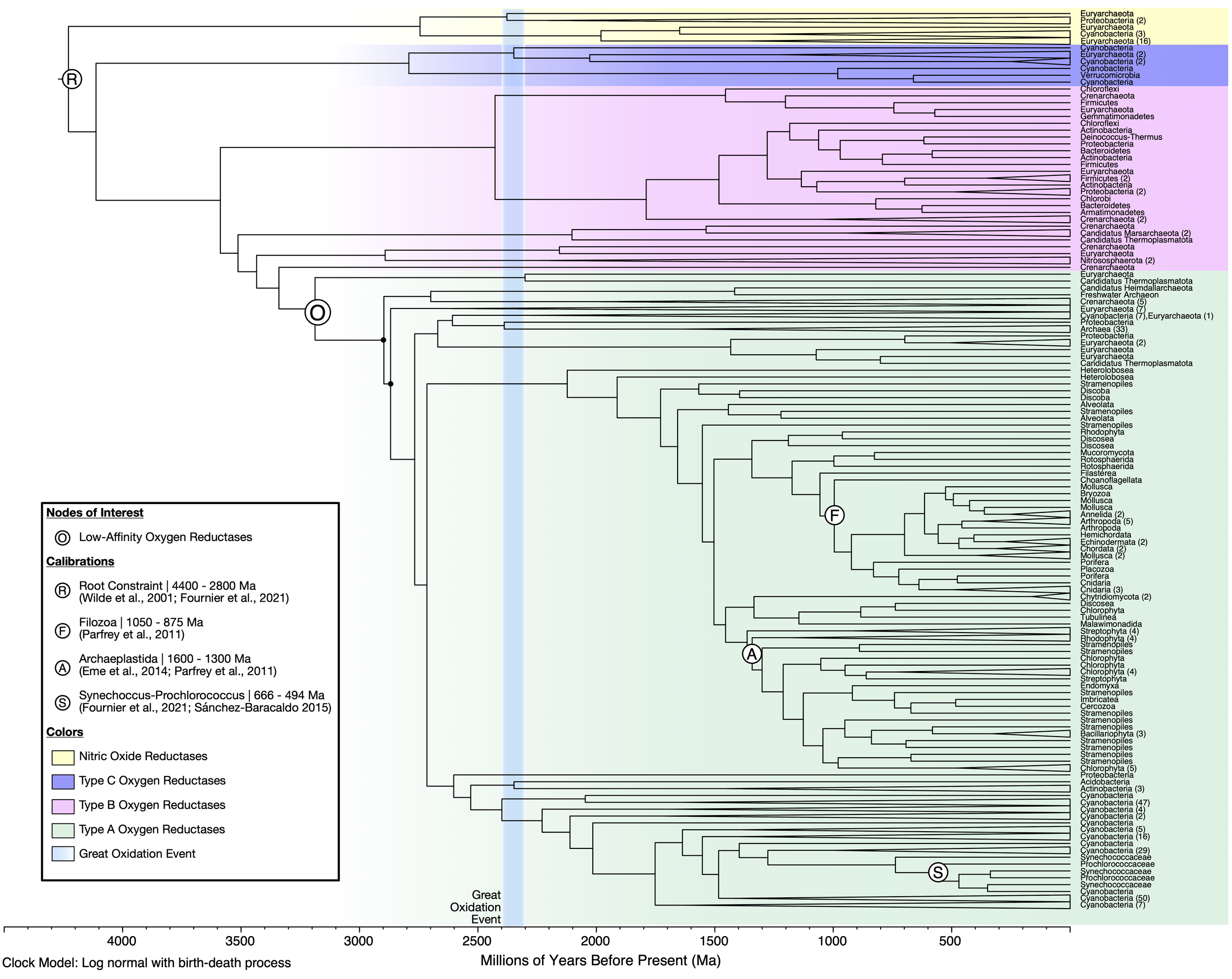
Cyanobacteria, prokaryotes that conduct oxygenic photosynthesis, likely arose on Earth 3.5 to 3.2 billion years ago. For the next billion years or so after their advent, Earth’s early atmosphere was largely anoxic: The oxygen produced by cyanobacteria wasn’t accumulating but was being consumed by geochemical processes, oxygen-consuming microbes, or potentially both. Estimating when aerobic respiration emerged in deep time may help us understand what role oxygen-consuming metabolisms played in this delayed establishment of a permanently oxygenated atmosphere.
To this end, my colleagues and I examined the evolutionary history of heme-copper oxygen reductases, enzymes that directly interface with oxygen in aerobic election transport chains. For this analysis, we assembled a dataset of heme-copper oxygen reductase protein sequences from all domains of life and used this information to generate phylogenetic trees that described the relatedness and inferred common ancestors of these enzymes. Coupling these trees to dated fossil evidence in the sedimentary record enabled molecular clock analysis, in which the emergence of the heme-copper oxygen reductases and their subtypes could be pinned onto the geologic timescale.
Our findings suggest that aerobic respiration via heme-copper oxygen reductases likely emerged during the Mesoarchean (3.2 to 2.8 Ga) demonstrating that both geochemical and biological mechanisms may have delayed Earth’s oxygenation (figure 4 from our paper, which shows our chronogram of heme-copper oxygen reductases, above). This work is one part of a growing consensus among molecular phylogeneticists that oxygen-interfacing metabolisms emerged and diversified before the establishment of a permanently oxygenated atmosphere.